
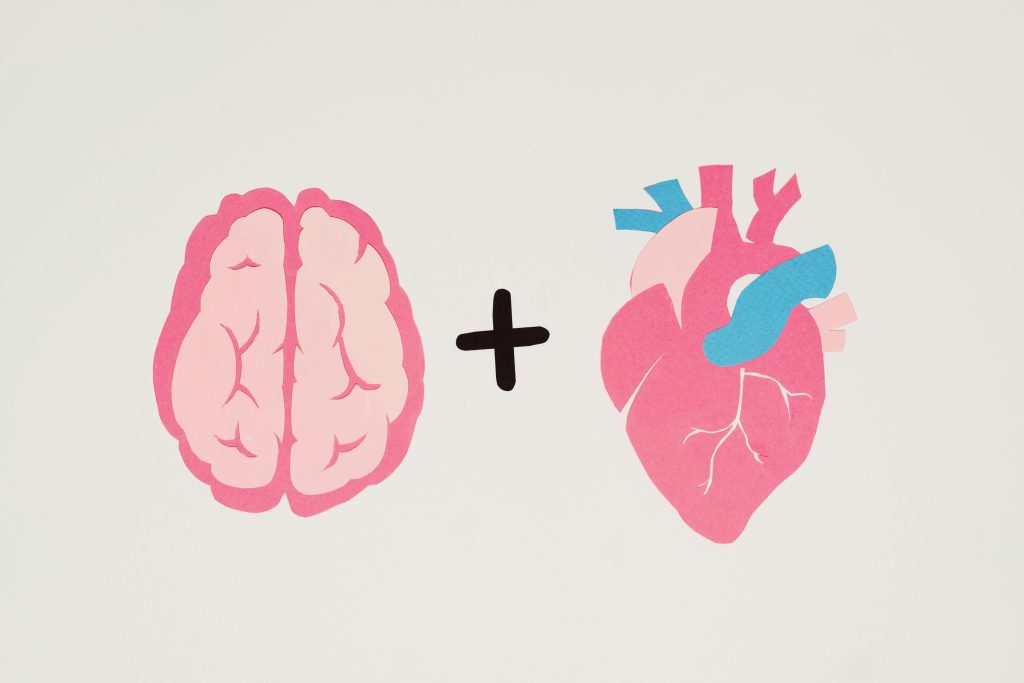
Many of us experience moments where the body reacts before we have time to think, a sudden flinch, a wave of discomfort or a feeling that seems to arise without a clear cause.
When we try to consciously ‘think our way out’ of these experiences, it often doesn’t work. This raises an important question: what is really in control? Is it the conscious mind, or deeper processes shaping our responses beneath awareness?
Modern neuroscience including the work of V.S. Ramachandran offers compelling insight:
Through neurological case studies and innovative experiments, Ramachandran demonstrates that perception, sensation and even our experience of the body are largely constructed outside of conscious awareness.
This understanding is central to medical hypnosis, clinical hypnotherapy and hypnotherapy for chronic pain. When we begin to work with the unconscious processes that shape perception, meaningful and lasting change becomes possible.
The Neuroscience of Pain: The Mind – Body Connection
The research of V.S. Ramachandran is widely recognised for its insights into phantom limb pain, a condition where patients continue to feel sensations, often intense pain, in a limb that is no longer physically present.
From a purely physical perspective, this should not occur, yet it does.
This tells us something crucial:
Pain is not felt by the body alone. It is generated by the brain, shaped by neural maps and influenced by expectation, memory and perception.
Ramachandran demonstrated this using a mirror box, where patients ‘trick’ the brain into perceiving movement in a missing or paralysed limb. In many cases, this significantly reduced or even eliminated pain.
This is not simply imagination. It is clear evidence that when perception changes, the experience of the body changes with it.
In other words, what we feel is not always a direct reflection of physical reality. It is a construction of the mind.
This is where the distinction between conscious and unconscious processes becomes important. The conscious mind may recognise that a limb is gone, yet unconscious neural patterns can continue to generate very real sensations.
This is the foundation for hypnosis for pain management.
Why conventional approaches often fall short
Many traditional approaches to chronic pain, stress related conditions and behavioural patterns focus heavily on conscious control.
We try and override these experiences by:
- Distracting ourselves
- Pushing through
- Suppressing the symptoms
While this may sometimes bring short term relief, it often leaves the root cause unresolved.
The work of V.S. Ramachandran provides further insight:
The processes that generate these experiences are not primarily conscious. They are embedded in automatic neural networks that operate beneath awareness.
This is why relying on willpower alone can feel like trying to change the flow of a river by moving only the surface water.
The deeper current remains untouched.
Why this matters for chronic pain and symptoms
This is particularly relevant for:
- Hypnotherapy for chronic pain
- Hypnosis for pain management
- Mind- Body clinical hypnosis
- Hypnosis for physical symptoms
- Clinical hypnotherapy for pain
In many of these cases, symptoms are maintained by unconscious feedback loops within the nervous system.
These loops are not easily accessed through reasoning, analysis or conscious effort alone.
If the habit is unconscious, the approach also needs to work at that level.
This is where clinical hypnotherapy becomes relevant.
Rather than trying to force change through effort, hypnosis works by shifting the underlying perception and responses that generate the experience in the first place.
In other words, it works with the mind and body, not against it.
How Hypnotherapy Helps
Modern neuroscience and clinical hypnosis are increasingly aligned in understanding how the brain constructs experience. If perception is shaped by neural processing, then changing that processing can change subjective experience itself.
Hypnotherapy works by guiding attention into a focused, receptive state where the critical filtering of the conscious mind is reduced. This allows access to deeper patterns that influence perception, emotion and how the body responds.
It is not about control. It is about attention, safety and therapeutic communication.
Creating safety in the mind and body
Research demonstrated that the brain can generate pain and sensory experiences even without direct physical cause. This highlights the role of the nervous system in amplifying or sustaining symptoms.
Through hypnotherapy for pain management, the goal is to support the nervous system in returning to a regulated, safer baseline. As physiological threat responses reduce, symptoms often soften naturally.
This is often described as recalibrating how the brain interprets the body’s signals.
Reshaping Emotional and Behavioural Responses
Many emotional and physical responses are learned over time. The mind builds predictive patterns based on past experiences, which can become automatic.
Clinical hypnosis for chronic pain and stress- related symptoms allows these patterns to be safely explored and updated. New associations, meanings and responses can be introduced, supporting more flexible and adaptive reactions.
In simple terms, hypnotherapy helps ‘update’ the brain’s internal model of experience.
Regulating the stress response
When the nervous system remains in a prolonged sympathetic (fight or flight) state, symptoms such as pain, tension and fatigue can become more intense.
Hypnosis for pain and symptom regulation often focuses on shifting the body towards a more balanced parasympathetic state. In this calmer state, the body has greater capacity for regulation and recovery.
This aligns with current understanding of neurophysiology and pain modulation.
What to Expect in a Hypnotherapy Session
Medical hypnotherapy is collaborative, structured and client led. There is no loss of control.
Sessions typically begin by exploring how symptoms present, including triggers, fluctuations and patterns of change. From there, attention is gently guided inward to increase awareness of internal experience.
Using therapeutic language, imagery and suggestion, new ways of experiencing the body and its signals are introduced.
Over time, many clients notice that long standing patterns become less rigid and more manageable.
Clinical Applications
Approaches such as:
- Hypnotherapy for chronic pain
- Hypnosis for pain management
- Clinical hypnotherapy for stress and symptoms
Are increasingly recognised as useful complementary interventions within integrative healthcare models.
As we begin to understand the work of V.S. Ramachandran , a powerful insight emerges: our experience of the body is not fixed, but fluid, shaped by processes that often sit beneath conscious awareness.
With that understanding lies real potential.
Medical hypnosis and clinical hypnotherapy offer a structured, evidence informed way to work with these subconscious patterns, supporting the mind – body connection in a way that is both natural and grounded. Rather than forcing change, this approach works with the underlying processes that shape perception, response and recovery.
If you are curious about how this could support you, you are welcome to book a confidential session here.